
Flat Webbing Sling Tension Test Standard
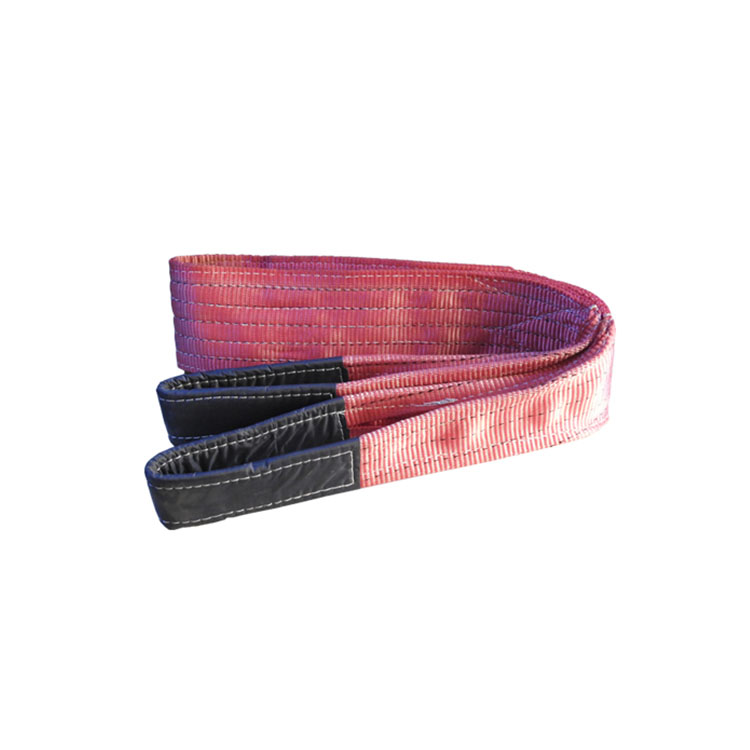
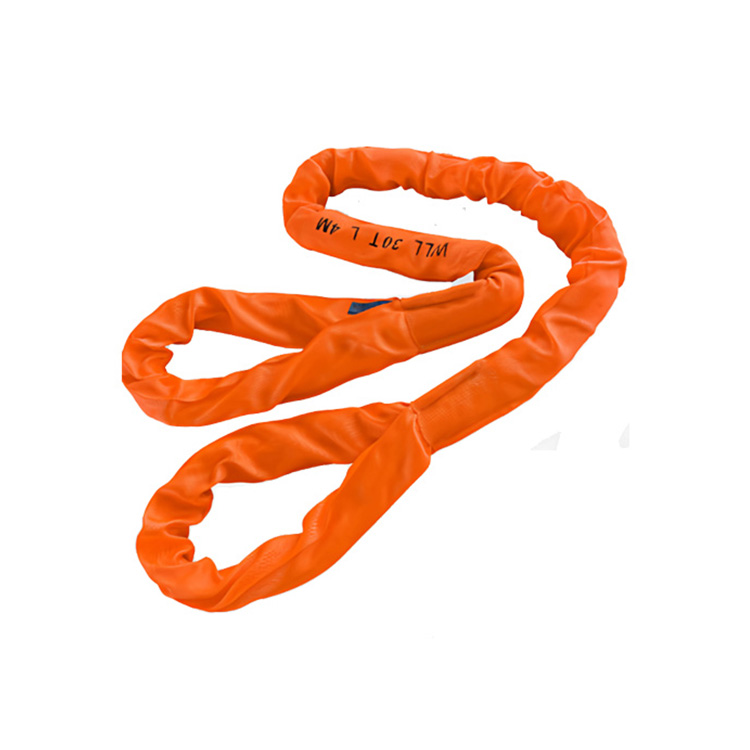
Hebei?Shengyu?Hoisting?Machinery?Manufacturing?Co.,?Ltd. produces flat webbing slings, strictly adhering to JB/T 8521.1-2007 "Flat Lifting Slings for Heavy Lifting" and GB/T 23894-2021 national standards for tensile testing. This ensures the safety, stability, and durability of the products during lifting operations, providing reliable protection for engineering lifting.
The test employs a high-precision electronic tensile testing machine with an accuracy of no less than ±1%, and a measuring range covering 1.5–2 times the expected breaking tensile force. It is equipped with dedicated flexible clamps to prevent clamping damage from affecting test results. At least three finished products of the same specification are randomly selected from each batch as samples. The testing environment for the flat webbing slings is maintained at room temperature, dry, and free from corrosion, with the ambient temperature controlled between 15℃ and 35℃. Direct sunlight, strong winds, oil contamination, and contact with chemicals are avoided. The testing site is flat and stable, with no vibration interference to the equipment, and the samples are not subjected to external pre-tension to ensure the data is accurate and meets national standard testing requirements.
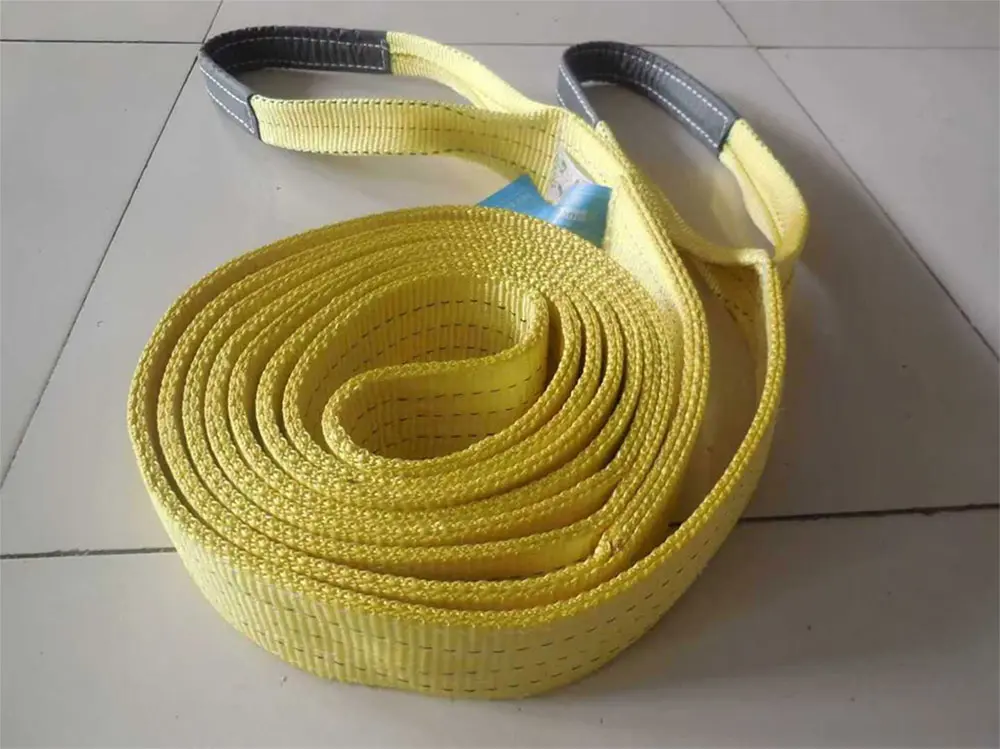
1.The core indicator for the tensile strength test of flat webbing slings is the safety factor. Shengyu Lifting's flat webbing slings have a minimum breaking strength of no less than 7 times the rated working load, far exceeding conventional safety requirements, providing ample safety margin for on-site operations. For example, a lifting sling with a rated load of 5 tons must have a minimum breaking strength of ≥35 tons; for a 10-ton sling, it must be no less than 70 tons. During the test, force is applied at a uniform rate, controlled between 80 and 120 mm/min, until the sample breaks. If the breakage occurs in the eyelet seam area, clamping area, or if delamination, fraying, or seam tearing occurs, the test is considered unqualified. Only when the breakage occurs in the effective area of the middle of the sling is the test considered valid.
2. Static load testing is a crucial step in verifying the stability of flat webbing sling structures. The sample is loaded with twice the rated working load and held for 10 minutes. Observe the sling for any signs of localized bulging, loosening of seams, interlayer separation, or permanent deformation. After unloading, measure dimensional changes. If the deformation is within allowable limits and there is no damage, the test is successful. Simultaneously, strictly control the elongation rate: under rated load, the elongation rate should not exceed 10%, and the total elongation rate at break should not exceed 20%, ensuring controllable deformation of the sling under stress and improving the stability of the lifting process.
3.Regarding stitch strength, Shengyu Lifting implements higher internal control standards. The eyelet uses a multi-layer reinforcement process, and the stitching thread is high-strength polyester thread with uniform stitch spacing and meeting density standards. The stitch strength is no less than the strength of the belt body, eliminating the risk of unraveling or tearing during operation. In terms of raw materials, high-strength polyester industrial filaments are selected, and their tensile strength, aging resistance, and fatigue resistance have all been tested to ensure stable tensile performance from the source.
Quality and Factory Requirements
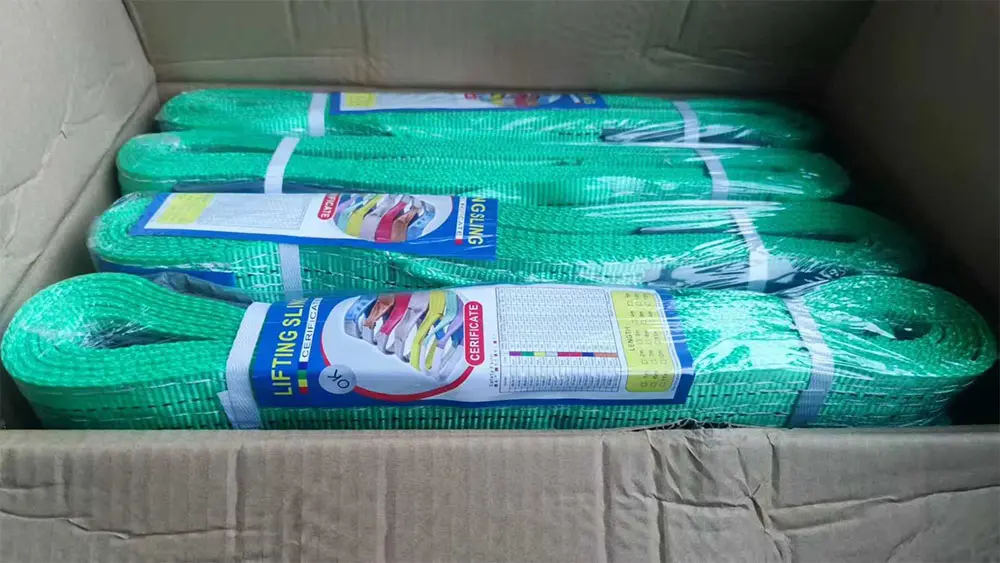
Hebei Shengyu Lifting Equipment uses high-strength polyester industrial yarn with a breaking strength ≥65cN/tex, double-layer reinforcement of the loops, and a stitch strength no less than the strength of the belt body. All products undergo 100% tensile strength testing; only those that pass are issued a test report, labeled with load capacity, color code, factory number, and safety factor before entering the market.
Adhering to national standards as the baseline and quality as the core, Hebei Shengyu Lifting Equipment's flat webbing sling tensile strength standards are stricter than industry requirements, suitable for scenarios such as machinery manufacturing, steel structures, port logistics, and power construction, building a solid safety barrier for lifting operations.
Related News
- How Does the Electric Winch Perform Lifting in Confined‑Space Environments?
- How to Hoist with Simple-Steel-Frame Electric Winch?
- Can a Flexible Lifting Sling Cut by the Load's Sharp Edge Still Be Used?
- How Risky Is It Really When Chain and Load Binder Sizes Don't Match?
- What is the Function of the Rope guide for Electric Winches?
- What Scenarios Are Electric Winches Suitable For?
Leave me a message