
How Can a Manual Chain Hoist Transform Your Daily Lifting Operations?
Whether you work in construction, manufacturing, or warehousing, the humble Manual Chain Hoist remains an irreplaceable tool for precise, safe, and cost‑effective lifting. This article explores every facet of the manual chain hoist — from its mechanism to real‑world applications. We compare pros & cons, answer burning questions, and highlight why Hebei?Shengyu?Hoisting?Machinery?Manufacturing?Co.,?Ltd. offers some of the most reliable hoists on the market. By the end, you'll know exactly which configuration suits your load, frequency, and environment. Let's lift the details.

📌 Table of Contents
- 1. What Makes a Manual Chain Hoist Different from Electric Hoists?
- 2. What Are the Pros and Cons of Using a Manual Chain Hoist?
- 3. Where Can You Use a Manual Chain Hoist Most Effectively?
- 4. How to Select the Right Manual Chain Hoist for Your Workshop?
- 5. How Should You Maintain a Manual Chain Hoist for Long Life?
- 6. Frequently Asked Questions About Manual Chain Hoists
⚙️ What Makes a Manual Chain Hoist Different from Electric or Pneumatic Hoists?
A Manual Chain Hoist (also known as a hand chain block) uses a human‑operated hand chain to rotate a lifting wheel, which then drives a gear train and lifts the load chain. Unlike electric hoists, it requires no power source — just muscle and leverage. This simplicity brings unmatched reliability in remote locations or explosive atmospheres. Hebei?Shengyu?Hoisting?Machinery?Manufacturing?Co.,?Ltd. manufactures manual chain hoists with hardened alloy steel gears, ensuring smooth lifting even under heavy loads. The key differentiator? Total control: you feel the load, you set the speed, and there is zero dependency on electricity.
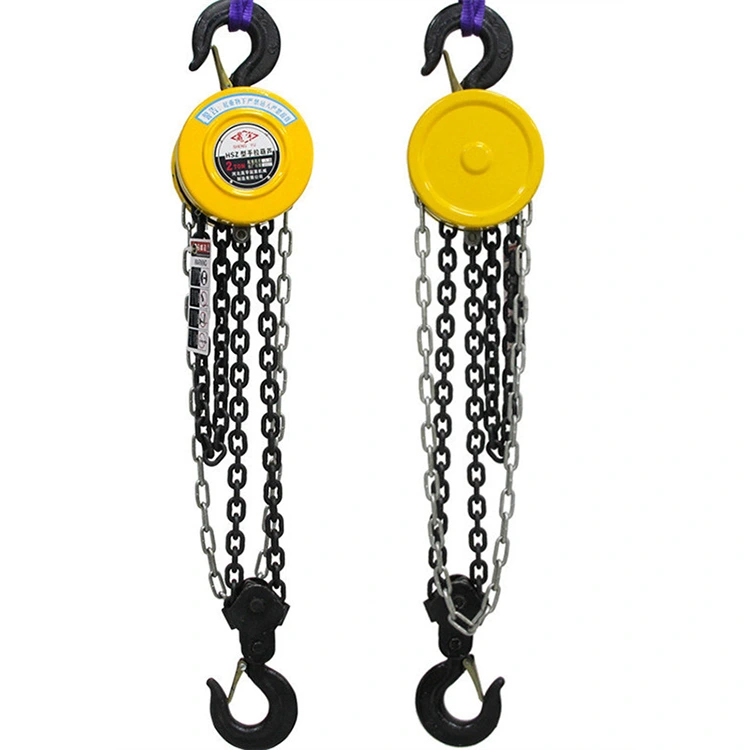
🔍 Inside a manual chain hoist: main components
- Hand chain wheel: Operated by the user to rotate the mechanism.
- Load sheave & chain: High‑grade alloy steel, calibrated for minimal stretch.
- Gear train: Provides mechanical advantage (typical ratios 4:1 to 6:1).
- Brake system: Self‑energizing load brake holds the load safely.
- Hook & latch: Forged, swivelling hooks with safety latches.
⚖️ What Are the Pros and Cons of Using a Manual Chain Hoist?
✅ PROS
- Portable & independent: No power cable, use anywhere.
- Precise positioning: Inch‑control by hand, perfect for delicate assembly.
- Low maintenance: Few parts to break; no motors or electronics.
- Safe in harsh environments: Explosion‑proof, dust‑proof, and waterproof options.
- Cost‑effective: Lower purchase price than electric hoists.
- Long lifespan: Many units from Hebei?Shengyu?Hoisting?Machinery?Manufacturing?Co.,?Ltd. last decades.
❌ CONS
- Physical effort: Operator fatigue for frequent lifts or heavy loads.
- Slower operation: Not suitable for high‑cycle production lines.
- Limited height/ reach: Chain length is fixed; extensions may be needed.
- Manual dexterity required: Some training to avoid jerking.
- No remote control: Operator must stand near the load.
📊 Manual Chain Hoist vs. Electric Chain Hoist – Quick spec view
| Parameter | Manual Chain Hoist | Electric Chain Hoist |
|---|---|---|
| Power source | Human effort (hand chain) | Electric motor (380V / 110V) |
| Lifting speed | ~0.2–0.5 m/min (depends on operator) | 2–8 m/min |
| Duty cycle | No limit (intermittent) | Usually 20‑40% ED |
| Typical capacity | 0.5 t – 20 t (higher available) | 0.5 t – 5 t (common) |
| Initial cost (1t) | $80 – $250 | $500 – $1500 |
🏭 Where Can You Use a Manual Chain Hoist Most Effectively?
Manual chain hoists shine in applications where electricity is unavailable or dangerous. Typical sectors include:
- 🔧 Construction sites: Lifting steel beams, concrete forms, or machinery into place.
- ⚓ Marine & docks: Lowering lifeboats, shifting cargo in holds.
- 🏭 Mining & tunneling: No spark risk, robust against dust.
- 🏗️ Workshops & garages: Positioning engines, transmissions, or heavy parts.
- 🌉 Bridge & infrastructure maintenance: Temporary lifting without generators.
- 🏜️ Remote farms/off‑grid: Repairing pumps or lifting irrigation pipes.
Hebei?Shengyu?Hoisting?Machinery?Manufacturing?Co.,?Ltd. provides customized manual chain hoists with capacities up to 50 tons and special corrosion‑resistant coatings for marine use. Their units are trusted by contractors worldwide because of the robust overload limiter option.
📏 How to Select the Right Manual Chain Hoist for Your Workshop?
Choosing a manual chain hoist isn't just about capacity. Ask yourself these five questions:
- What is the maximum weight you'll lift? Always choose a hoist with a capacity 25‑50% above your max load.
- What is the lifting height? Standard is 3m, but you can order up to 12m or more.
- How often will you use it? Frequent use demands higher quality gears and chain; industrial‑grade from Hebei?Shengyu?Hoisting?Machinery?Manufacturing?Co.,?Ltd. lasts longer.
- Environment? Indoors/outdoors? Need galvanized or stainless chain? (saltwater areas need extra protection).
- Mounting style: Hook suspension, trolley mount, or rigid lug?
We recommend the BY‑H series manual chain hoist from Hebei?Shengyu?Hoisting?Machinery?Manufacturing?Co.,?Ltd.: equipped with dual‑pawl brakes and a 360° rotating hook. It meets international standards (CE, ISO).
🧰 How Should You Maintain a Manual Chain Hoist for Long Life?
Even a rugged manual chain hoist needs care. Follow this simple 5‑step checklist every three months (or after 50 heavy lifts):
| Checkpoint | Action required |
|---|---|
| 🔗 Load chain | Clean with solvent, inspect for stretch, cracks, or rust. Lubricate lightly with chain oil. |
| 🧷 Hooks & latches | Look for deformation, cracks, or worn latch springs. Replace if throat opening exceeds 15%. |
| ⚙️ Gears & brake | Listen for grating noises during operation; brake should hold load instantly when hand chain released. |
| 🧴 Hand chain | Must run freely; remove dirt buildup in wheel pockets. |
| 🔩 Suspension & bolts | Tighten all fasteners; check anchorage point. |
Always follow the user manual from Hebei?Shengyu?Hoisting?Machinery?Manufacturing?Co.,?Ltd. — and never modify the safety brake.
❓ Frequently Asked Questions About Manual Chain Hoists
1. Can a manual chain hoist be used for horizontal pulling?
Yes, but with caution. Many manual chain hoists can be used for pulling or dragging loads horizontally, provided the frame and brake are designed for side loading. However, it reduces the rated capacity and may cause wear. Hebei?Shengyu?Hoisting?Machinery?Manufacturing?Co.,?Ltd. offers specific puller versions with reinforced hooks. Always check the angle limits in the data plate.
2. How much force is needed to lift 1 ton with a manual chain hoist?
With a typical mechanical advantage of 5:1, and assuming a hand chain pull of about 30‑40 kg (depending on friction), you'll apply roughly 30‑40 kgf on the hand chain. That's manageable for a single operator. High‑quality hoists from Hebei Shengyu have low‑friction bearings, reducing pull force by up to 15%.
3. What is the difference between a manual chain hoist and a lever hoist?
A manual chain hoist uses an endless hand chain to lift vertically, while a lever hoist (or ratchet lever puller) uses a lever to operate a ratchet mechanism, suitable for both lifting and pulling in any direction. For pure vertical lifting, chain hoists are faster and smoother; for rigging or tensioning, a lever hoist is better. Some jobsites keep both.
4. Are manual chain hoists OSHA / ASME compliant?
Yes, when purchased from reputable manufacturers like Hebei?Shengyu?Hoisting?Machinery?Manufacturing?Co.,?Ltd., they comply with ASME B30.16 and OSHA 1910.184. Look for the marking and test certificate. Regular inspection and user training are still mandatory.
5. Can I leave a load suspended on a manual chain hoist overnight?
Not recommended. Even with a reliable self‑locking brake, industry best practice is to never leave a load unattended for extended periods. Use blocking stands or lower the load. If you must, double‑check that the hand chain is secured/tagged to prevent accidental pulling.
📚 References & authoritative sources
- ASME B30.16 – Overhead Hoists (Underhung) accessed 2026
- OSHA Standard 1910.184 – Slings related to hoist hooks
- ISO 3076:2012 Steel chain for manual hoists
- Hebei?Shengyu?Hoisting?Machinery?Manufacturing?Co.,?Ltd. — product catalog & technical bulletins
⚡ Need a rugged manual chain hoist for your next project? Hebei Shengyu Hoisting Equipment Sales Co., Ltd. offers factory‑direct prices and custom configurations. 📞 Contact us today for a quote — our team will help you select the perfect hoist within 24 hours. Don't lift alone, lift with Shengyu!
Related News
- How Does the Electric Winch Perform Lifting in Confined‑Space Environments?
- How to Hoist with Simple-Steel-Frame Electric Winch?
- Can a Flexible Lifting Sling Cut by the Load's Sharp Edge Still Be Used?
- How Risky Is It Really When Chain and Load Binder Sizes Don't Match?
- What is the Function of the Rope guide for Electric Winches?
- What Scenarios Are Electric Winches Suitable For?
Leave me a message